Jewelry Repair
Learning Center
Discover how professional jewelry repairs are performed, what causes jewelry damage, and how expert restoration can bring your jewelry back to life.
The History of Jewelry Repair
Jewelry repair has existed for thousands of years — ancient civilizations valued precious pieces enough to mend and pass them down.
Ancient Egyptian and Mesopotamian goldsmiths repaired royal jewelry by hand using charcoal forges and primitive solders.
European goldsmith guilds standardized repair techniques, training apprentices in soldering, sizing, and stone setting.
Industrial-grade torch soldering, electric polishing, and standardized tools transform jewelry repair into a precise craft.
Modern jewelers combine traditional torch work with laser welding, ultrasonic cleaning, and micro-precision tools to restore any piece.
Why Jewelry Gets Damaged
Eight everyday causes of jewelry damage — and how to spot them early.
Daily Wear
Even normal wear gradually thins bands, wears prong tips, and stretches chain links over years.
Accidental Impact
Bumping rings against counters, doors, and gym equipment causes bent shanks, cracked stones, and bent prongs.
Chemical Exposure
Chlorine, bleach, hand sanitizer, and lotions weaken gold alloys and dull lens-thin rhodium plating.
Water Damage
Pool chlorine and salt water corrode silver and accelerate wear on plated finishes — never swim in fine jewelry.
Worn Prongs
Prong tips wear flat with use. Once worn below 50%, stones can fall out without warning.
Thin Bands
Wedding bands worn 24/7 wear thin under the finger — eventually cracking or breaking if not rebuilt.
Chain Wear
Chains rub link-on-link with every movement. Hollow chains and thin solder joints fail first.
Improper Storage
Tangled chains, scratched stones, and tarnished silver all come from tossing jewelry into a single drawer.
Ring Resizing Explained
The seven-step professional process — and which rings can (and cannot) be resized.
Current and target size measured with precision mandrels and ring gauges.
For sizing down, a segment is removed; for sizing up, the shank is cut and spread.
Matching karat metal is added (sizing up) or excess removed (sizing down).
The seam is fused with matching solder or laser-welded for invisible joints.
The ring is hammered round on a steel mandrel to restore perfect circularity.
Solder seam is smoothed and blended into the original surface.
Polished to a mirror finish — or refinished to match the original brushed/matte texture.
Which Rings Can Be Resized?
Easy resize up or down — most flexible piece in the shop.
Resizable with care — stones must be checked and tightened afterward.
Stones around the entire band make traditional resizing impossible. Alternative: sizing beads or shanking.
Tungsten cannot be cut and re-soldered — it shatters under heat. Must be replaced.
Most titanium rings cannot be resized due to material hardness. A few softer alloys can be sized up slightly.
Easy to size, but solder seams may show on heavily polished pieces.
Resizable but requires specialty platinum solder and higher torch temperatures.
Chain Repair Explained
Every chain repair we perform — and how each one is done.
Soldering Broken Chains
Snapped links are realigned and re-soldered or laser-welded with matching karat metal.
Jump Ring Repair
Bent or broken jump rings (where the clasp attaches) are replaced and reinforced.
Clasp Replacement
Lobster, spring ring, and box clasps are swapped — usually with an upgrade in strength.
Chain Lengthening
Matching karat links are added to extend chains to a longer size.
Chain Shortening
Excess links are removed and the chain is rejoined seamlessly.
Chain Restoration
Stretched, kinked, or knotted chains are straightened, polished, and renewed.
Most chain failures come from worn solder joints, kinks from being twisted, or chains too thin for daily wear. Read our Chain Guide to learn how to choose chains that last.
Laser Welding Explained
The modern jewelry repair technique that protects stones and delivers invisible repairs.
What Is Laser Welding?
Laser welding uses a focused beam of light (Nd:YAG laser) to melt and fuse precious metal in pinpoint precision — often less than 1mm across.
Unlike a torch, the laser delivers heat only at the exact spot of repair. The metal millimeters away stays cool.
Laser vs Torch
Torch soldering heats the entire piece — risky near stones, plating, and delicate components. Laser welds only the joint.
For repairs near diamonds, emeralds, tanzanite, opal, or pearl — laser welding is the safer (and often only) option.
Pinpoint accuracy on tiny joints
Only the weld spot heats up
Stones stay in setting
Fully fused, structurally sound
Less polishing required
Torch Soldering Explained
The traditional jewelry repair technique — still essential for the right jobs.
How Torch Soldering Works
A small oxy-propane or oxy-acetylene torch heats the joint while matching karat solder flows into the seam. The solder has a slightly lower melting point than the parent metal, so the original piece stays intact.
Different solders for different karats — 14K yellow solder for 14K yellow gold, etc.
When Torch Is Preferred
- • Larger sizing jobs requiring metal addition
- • Chain solder where laser access is limited
- • Sterling silver work (silver reflects laser energy)
- • Heavy structural rebuilds on bands and bangles
- • Solid metal pieces with no stones nearby
Stone Tightening & Stone Setting
The five setting styles — and why stones become loose.
Most common — small metal claws hold the stone. Easiest to inspect and re-tighten.
Stones sit between two rails. Holds stones securely but requires specialty tools to tighten.
Stone is encircled by a metal rim. Extremely secure — rarely needs tightening.
Many small stones held by tiny beads of metal. Tightening requires high-magnification micro work.
Stones interlock with no visible metal between them. Specialty repair — not all jewelers offer it.
Why Stones Become Loose
Daily impact, worn prong tips, bent settings, and accidental hard knocks all loosen stones. Listen for a faint rattle when you shake the ring — that's a stone moving in its seat. Bring it in immediately before it falls out.
Prong Rebuilding
The most important — and most overlooked — repair to protect your stones.
Why Prongs Wear
Prong tips rub against clothing, surfaces, and skin every day. After 10–20 years, the metal wears flat.
How Diamonds Fall Out
Once prong height drops below 50%, the stone has nothing holding it down. A bump or snag is enough to lose it.
When to Rebuild
Inspect prongs annually. If tips are flat, thin, or visibly worn, we rebuild them with matching karat metal and laser welding.
Pro tip: Have your engagement ring prongs inspected every 6–12 months. Prong rebuilding ($40–$80 per prong) is dramatically cheaper than replacing a lost diamond.
Rhodium Plating Explained
The luxury finishing touch that keeps white gold brilliantly white.
What It Is
Rhodium is a rare precious metal from the platinum family — silvery-white and 10–25x more expensive than gold per ounce.
Why White Gold Needs It
White gold is naturally a pale yellow alloy. Rhodium plating gives it the bright-white finish you see in stores.
Expected Lifespan
1–3 years for everyday wear. Wedding bands worn 24/7 may need replating every 12–18 months.
Benefits
Brilliant white finish, scratch protection, hypoallergenic barrier over nickel, and enhanced sparkle for diamonds.
Jewelry Polishing & Refinishing
How professional polishing restores the original showroom shine.
Professional Polishing
- • Scratches removed with progressive abrasive wheels
- • Mirror finish restored with rouge compounds
- • Brushed and matte finishes recreated when needed
- • Ultrasonic and steam cleaning included
- • Done in minutes with the right equipment
Why DIY Polishing Fails
- • Removes too much metal — thins bands and prongs
- • Cleaning cloths embed with grit and create deeper scratches
- • Cannot remove deep scratches without skilled wheel work
- • Risk of damaging stones, plating, and engravings
- • Can destroy original brushed or matte finishes
Jewelry Restoration
Full restoration of vintage, heirloom, and antique pieces.
Vintage Jewelry
Restore 1950s–1990s pieces — re-tip prongs, replace lost stones, re-polish.
Heirloom Pieces
Family pieces brought back to life — preserving original character.
Antique Jewelry
Pre-1950s pieces handled with extreme care to preserve patina and value.
Ring Restoration
Full rebuild of worn bands, broken shanks, and damaged settings.
Chain Restoration
Stretched, kinked, or knotted chains straightened, polished, renewed.
Common Jewelry Repairs
Every jewelry repair service we offer — performed in-house.
Before & After Repair Gallery
Real repairs from the HA Jewelers bench.
Ring Repairs
HA Jewelers Bench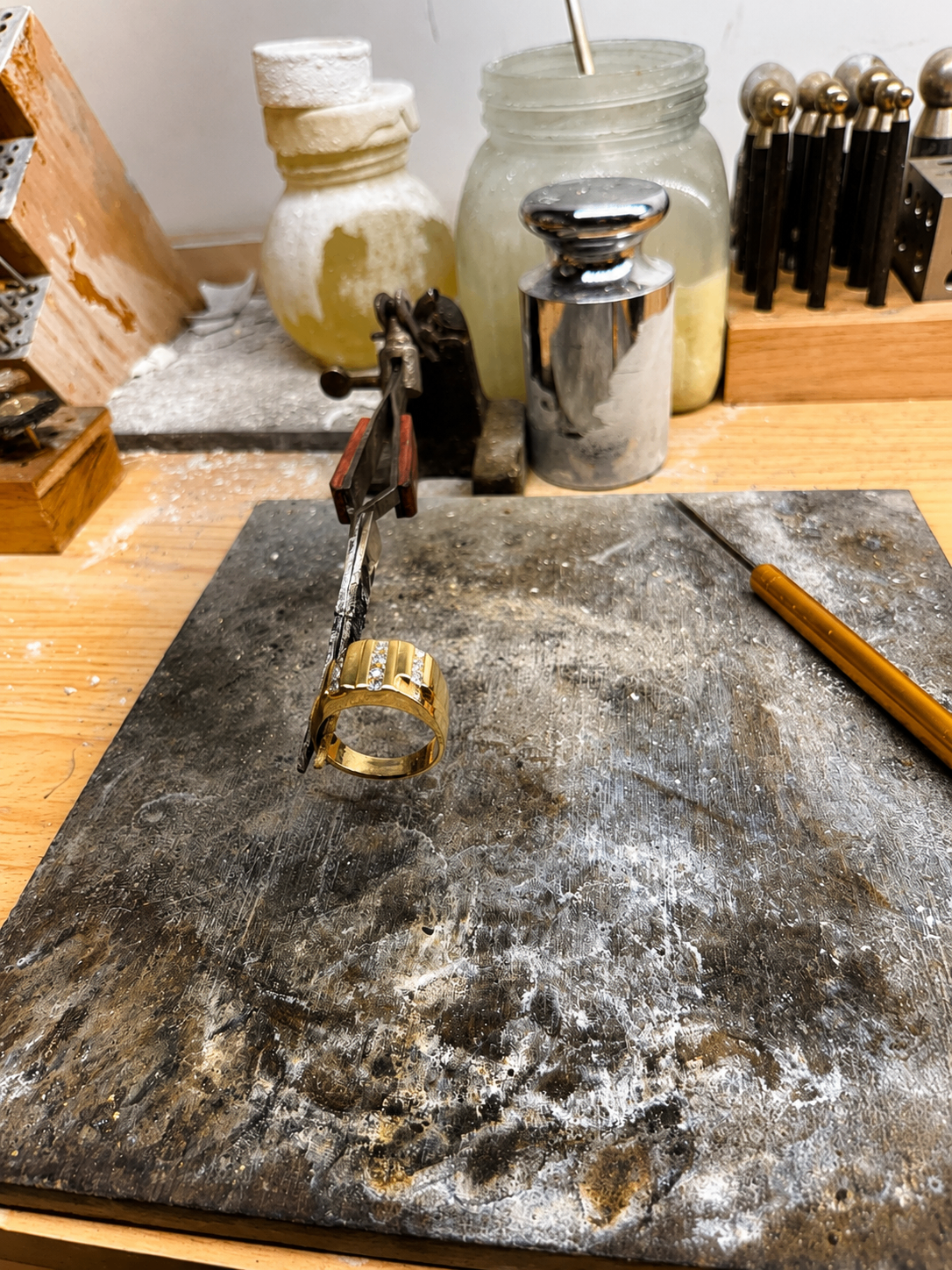
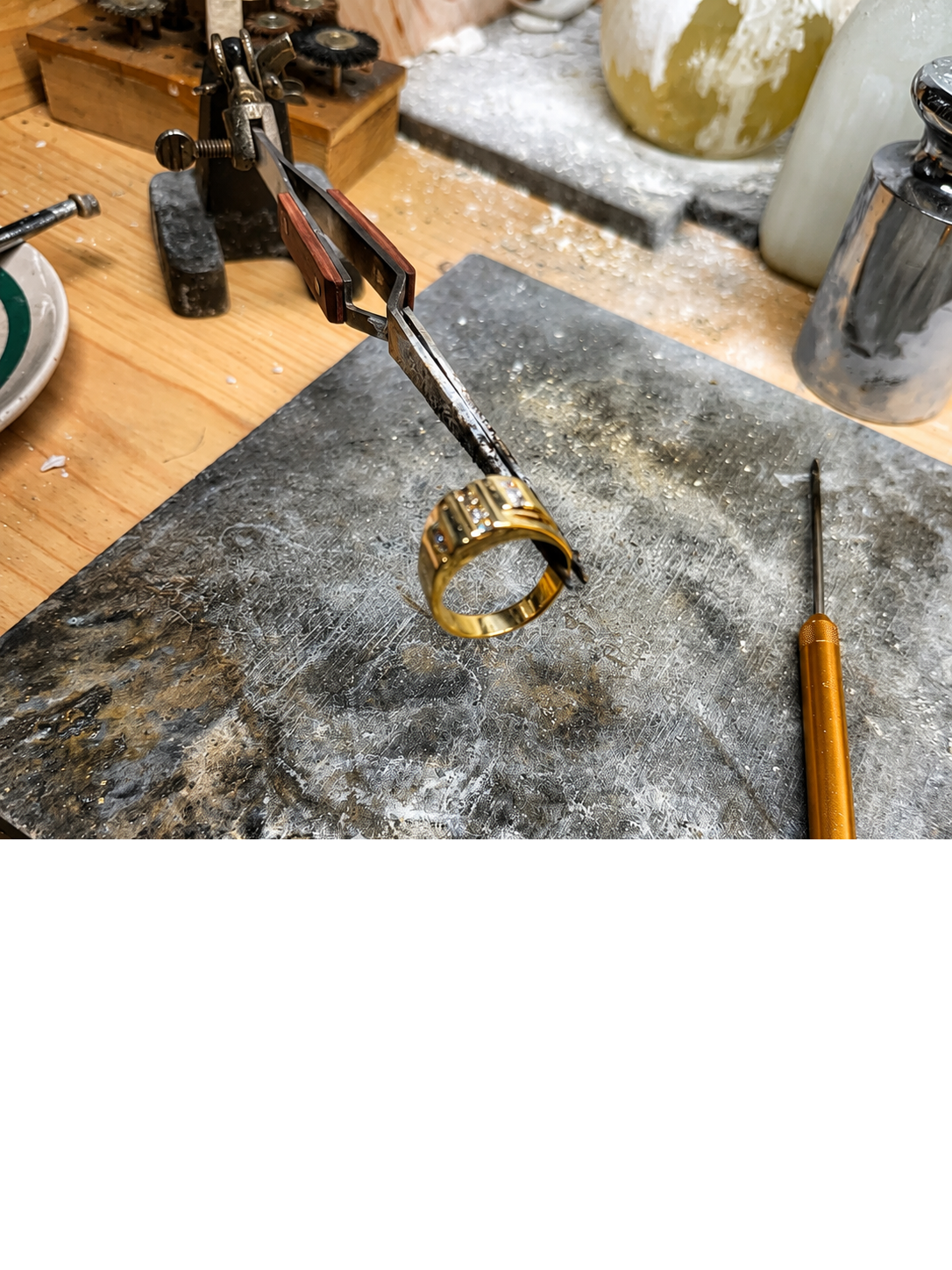
Ring resized and re-polished — invisible seam.
Chain Repairs
HA Jewelers Bench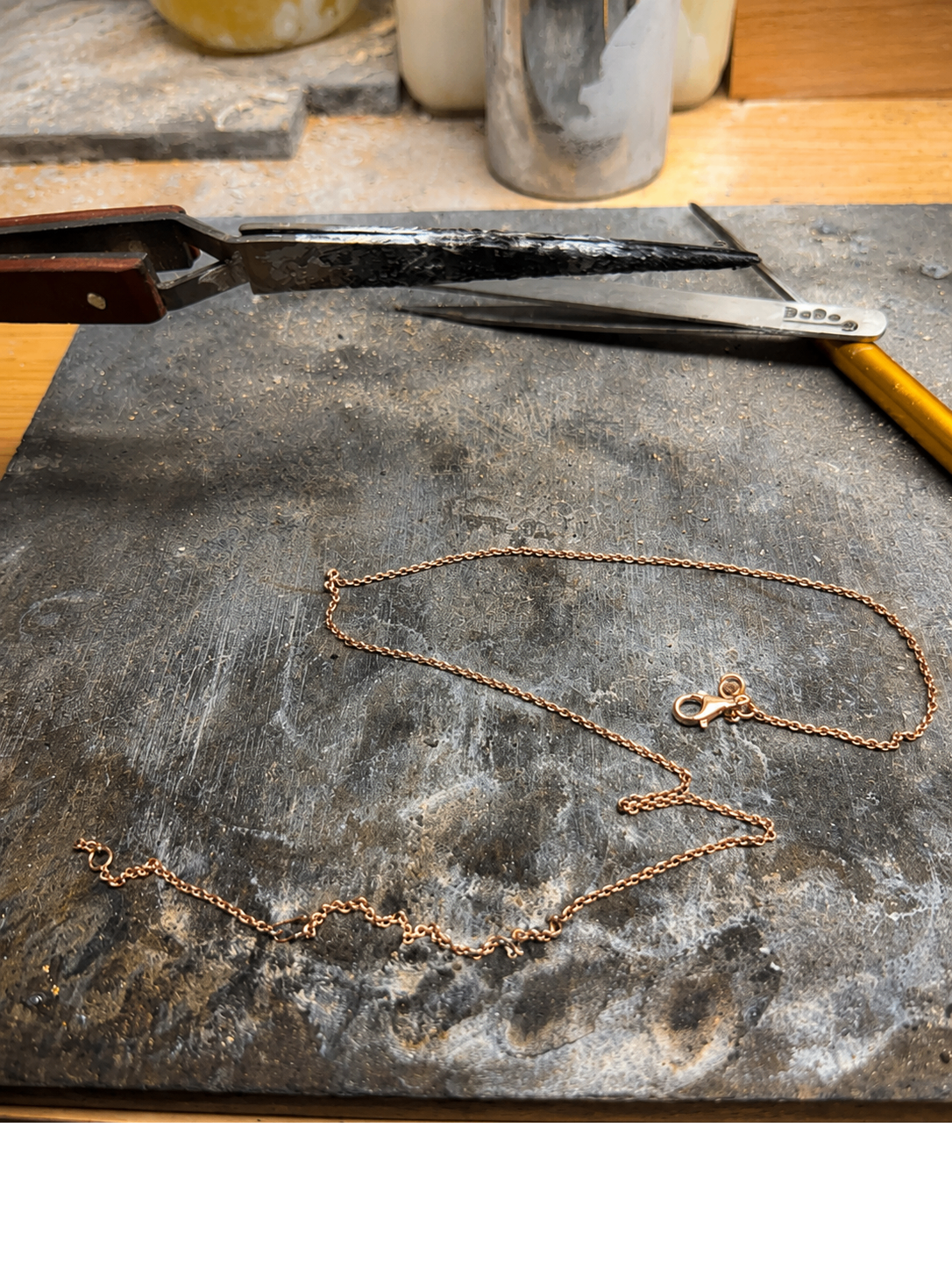

Chain shortened, re-soldered, and refinished.
Diamond Repairs
HA Jewelers Bench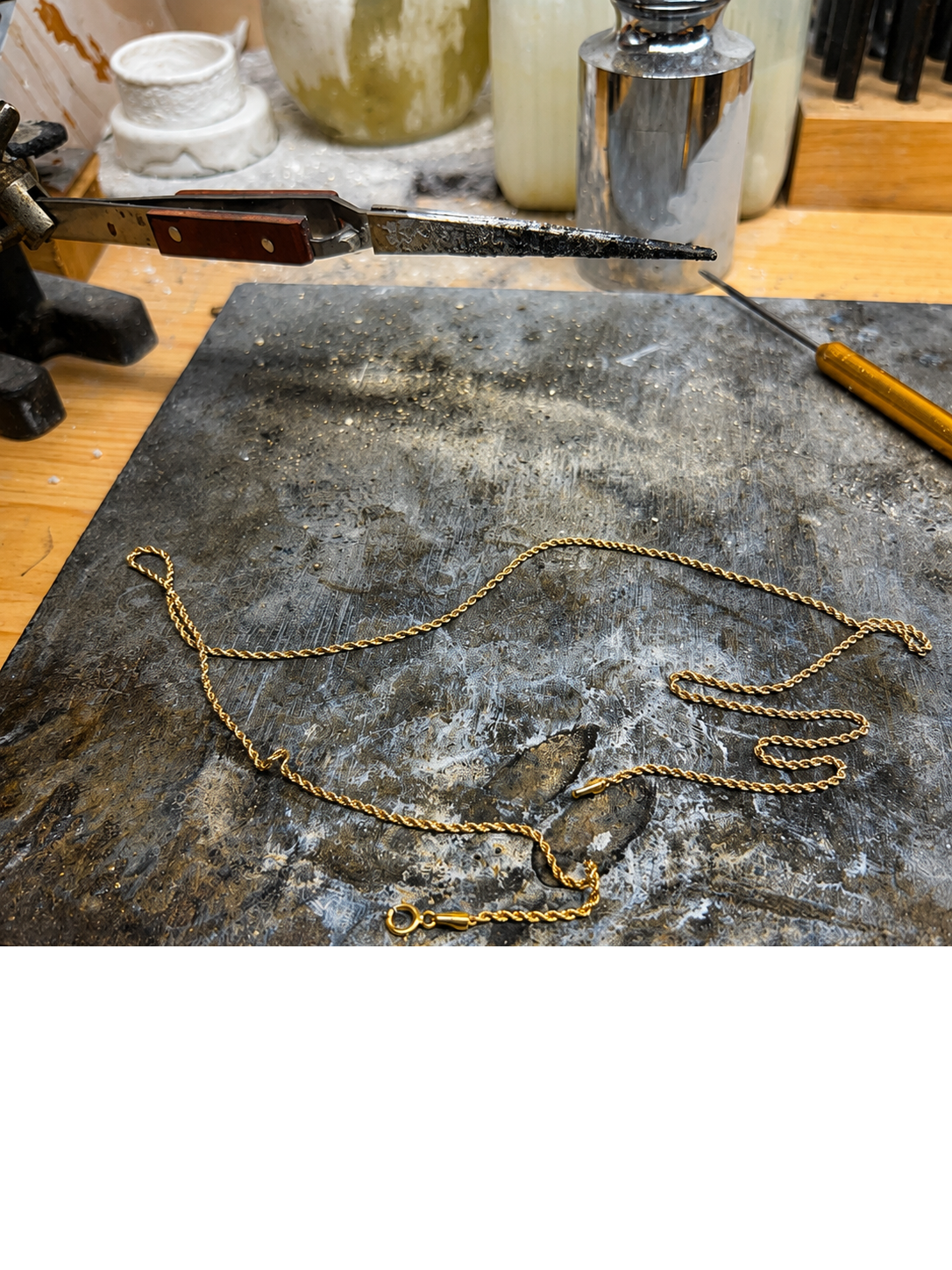
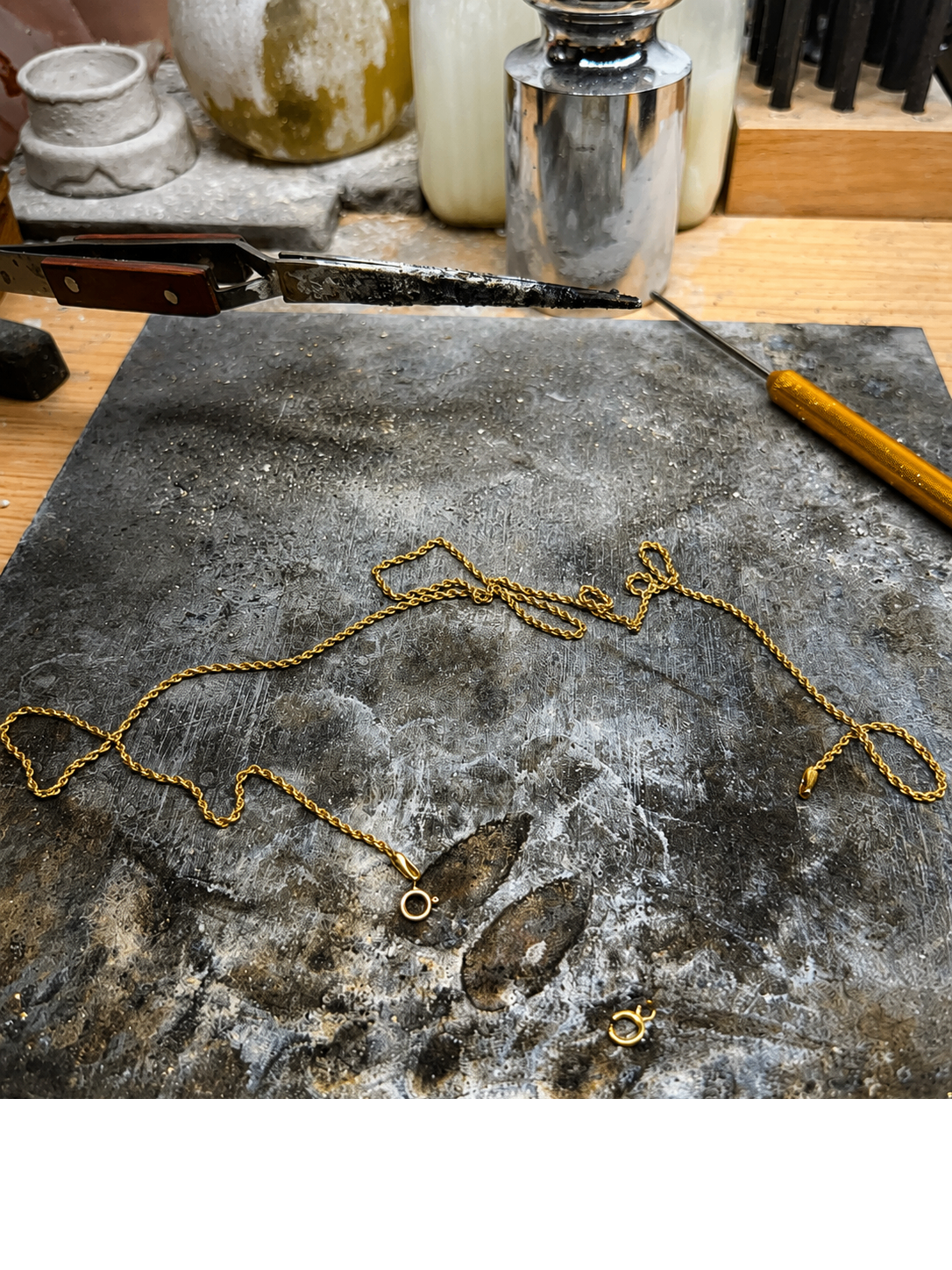
Rope chain clasp rebuilt with reinforced jump ring.
Jewelry Restoration
HA Jewelers Bench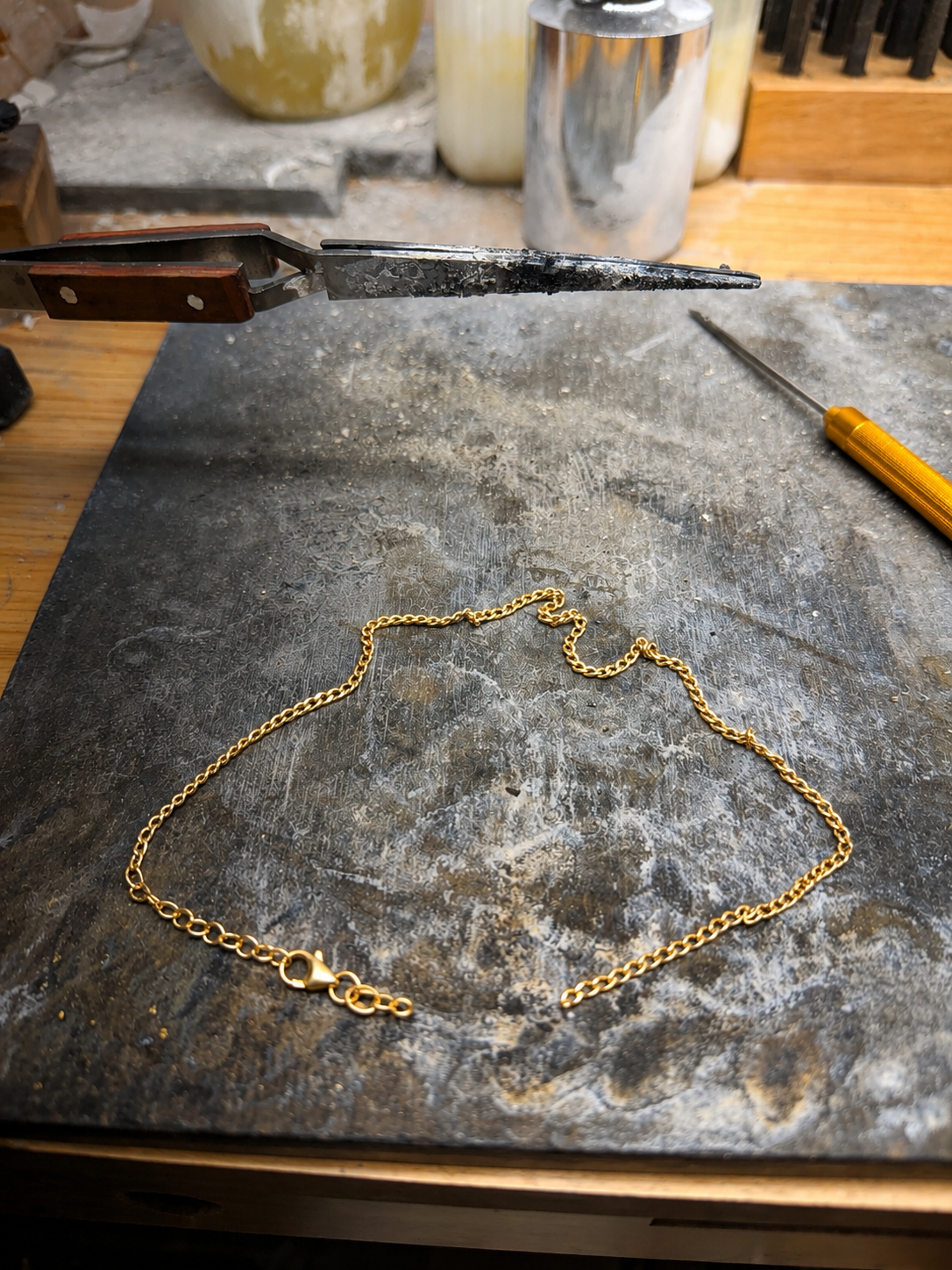

10K yellow gold anklet — fully restored and polished.
Stone Tightening
HA Jewelers Bench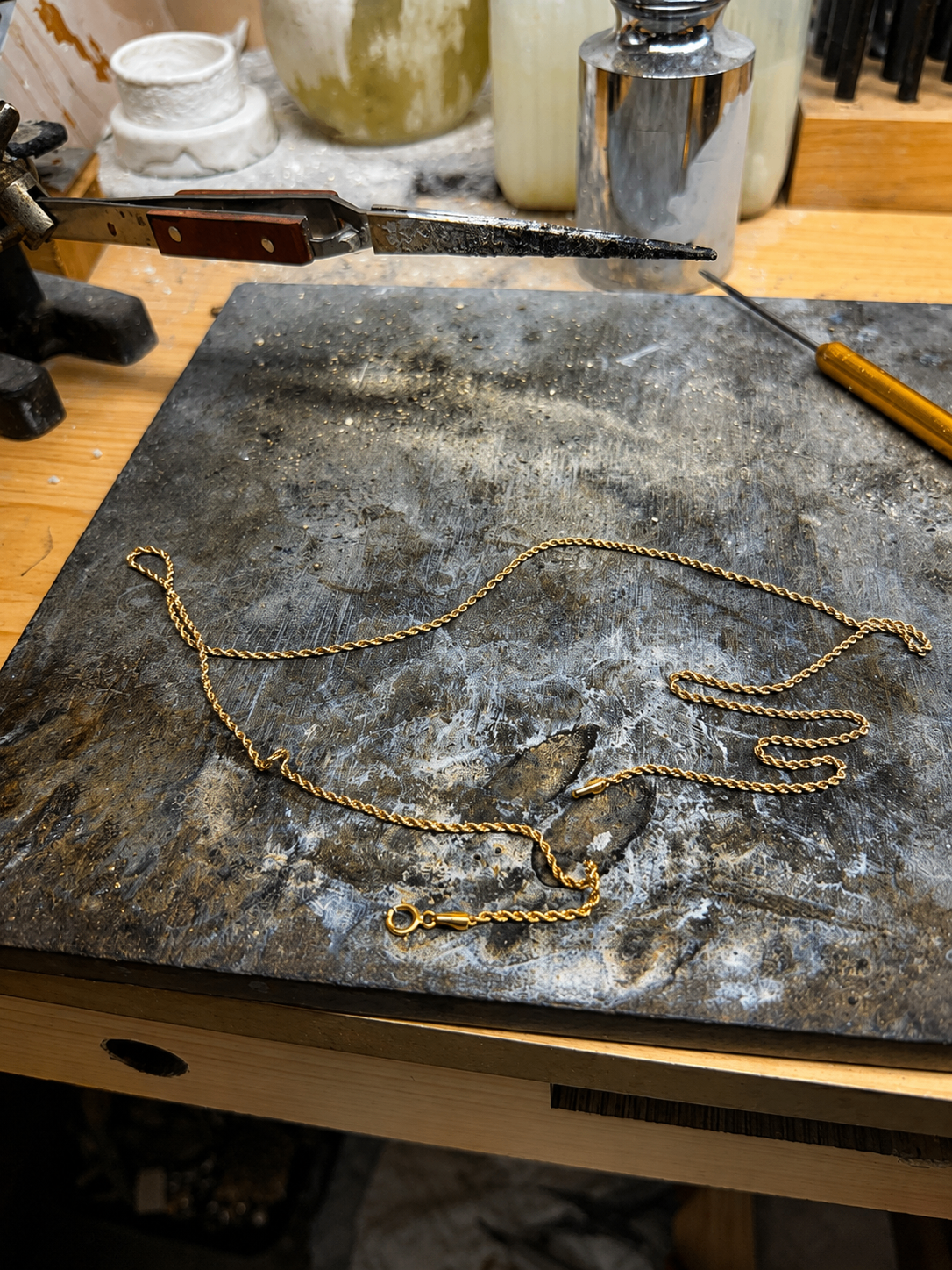
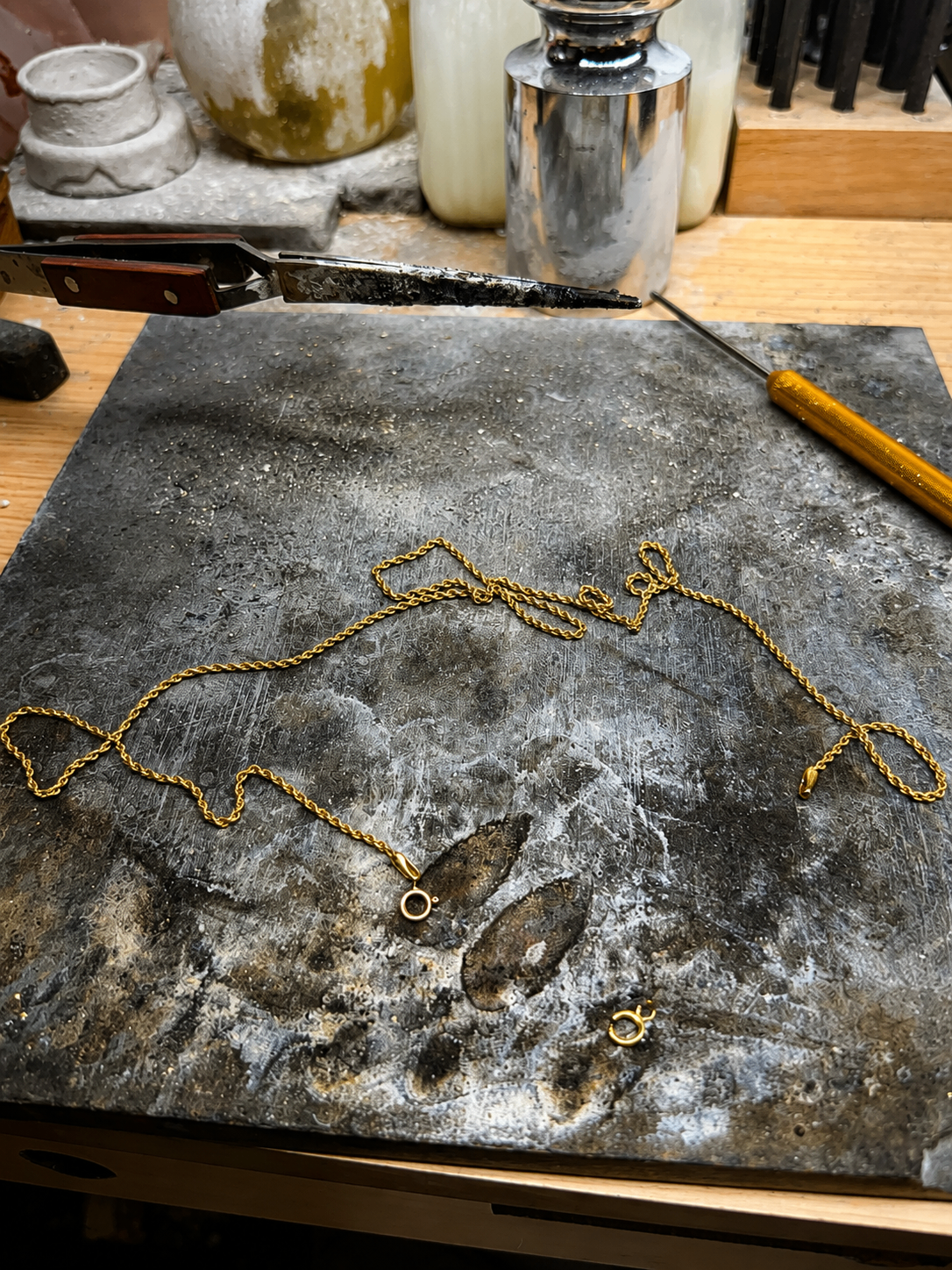
Worn clasp rebuilt and re-soldered for daily wear.
Common Jewelry Repair Questions
Real answers to the questions we hear most often at the counter.
Why Did My Ring Crack?
Worn-thin bands eventually crack under finger pressure. Common in long-worn wedding bands (10+ years). Repaired by adding new metal and laser welding.
Why Did My Chain Break?
Worn link joints, kinks from twisting, or impact stress. Hollow chains break much more easily than solid chains. Most are repairable.
Why Are My Stones Loose?
Worn prongs, bent settings, or a hard impact loosened the seat. Audible 'rattle' or visible movement = bring it in immediately.
Why Did My Prongs Wear Out?
Prong tips abrade with daily contact — clothing, hair, surfaces. Average lifespan is 10–20 years before rebuilding is needed.
Can My Jewelry Be Repaired?
Almost always yes — gold, silver, and platinum are all repairable. Tungsten, ceramic, and some titanium pieces are the rare exceptions.
Can My Ring Be Resized?
Most rings can be resized 1–2 sizes up or down. Eternity bands, tungsten, and most titanium rings cannot be resized traditionally.
Can Broken Gold Be Fixed?
Yes — broken gold is soldered or laser-welded with matching karat metal. The repair becomes structurally as strong as the original.
Can Broken Silver Be Fixed?
Yes — sterling silver is easily soldered and polished. Heavily oxidized or paper-thin silver may need partial replacement.
Can Platinum Be Repaired?
Yes — platinum requires specialty solder and high-temperature torch or laser welding. We repair platinum bands, prongs, and settings in-house.
Jewelry Repair Process
From inspection to pickup — exactly what to expect.
Bring your jewelry in — we inspect under magnification at no charge.
We diagnose the issue and explain exactly what your piece needs.
Written estimate with no surprises — work begins only after your approval.
Performed in-house by trained jewelers using laser welding and torch tools.
Every repair is inspected under magnification before it leaves the bench.
Ultrasonic and steam cleaning restore brilliance to every piece.
We walk you through the repair and verify your satisfaction before you leave.
Metals We Repair
Every precious metal handled in-house at HA Jewelers.
Yellow Gold (10K, 14K, 18K, 22K)
Full repair, resize, solder, laser weld, polish, restore.
White Gold
Repair + rhodium re-plating for that bright white finish.
Rose Gold
Repair with matching rose-gold solder to preserve color.
Platinum
Specialty platinum solder and laser welding for the densest metal.
Palladium
Laser welding preferred — preserves the natural white color.
Sterling Silver
Solder, weld, polish, and ultrasonic cleaning for tarnish.
Gold-Filled
Limited solder repair — laser welding preserves the thin gold layer.
Mixed Metal Pieces
Two-tone and tri-tone pieces repaired with matching solders.
Learn more in our Precious Metals Education Center.
Gemstones We Work With
Repair considerations for every common gemstone.
Hardest gemstone — withstands torch heat. Always check for inclusions before working near.
Highly heat-tolerant corundum — safe for most torch and laser work.
Heat-sensitive and oil-treated. Always laser welded or stones removed before torch work.
Heat sensitive — never expose to torch flame. Setting work done cold or with laser only.
Beryl family — moderate heat tolerance, but laser welding is preferred.
Quartz family — heat will change or destroy color. Stones removed before repair.
Generally durable but pyrope and demantoid varieties need extra care under heat.
Sensitive to thermal shock — best handled cold or removed for major work.
Never expose to heat or ultrasonics. Removed entirely before any repair.
Porous and absorb chemicals — removed before soldering or cleaning solutions.
Visit our Gemstone Education Center and Diamond Education Center for complete guides.
What Jewelry Cannot Always Be Repaired?
We're honest about the limits — here's what we can't always fix.
Severely Worn Chains
When chain wire thins below structural limits, every link becomes a future break point. Replacement is more honest than chasing breaks.
Damaged Hollow Chains
Hollow chains kink and crush easily. Once dented or cracked, the thin wall cannot hold solder reliably.
Cracked Tungsten Rings
Tungsten is brittle — it cracks rather than bends. It cannot be welded or soldered and must be replaced.
Certain Titanium Rings
Most titanium alloys cannot be sized or soldered. A few softer grades can be sized up slightly.
Ceramic Rings
Ceramic shatters on impact and cannot be welded. Once cracked, replacement is the only option.
Extremely Worn Settings
When the entire setting is paper-thin, rebuilding is more cost-effective than chasing prong repairs.
How To Prevent Jewelry Damage
Remove your jewelry before these eight activities to dramatically extend its life.
Swimming
Chlorine and salt water corrode silver and accelerate wear on plating.
Gym Workouts
Sweat, impact, and grip pressure bend rings and abrade chains.
Heavy Lifting
Even moderate weight can crush ring shanks against bars and dumbbells.
Cleaning Chemicals
Bleach, ammonia, and household cleaners dissolve gold alloys and dull stones.
Yard Work
Soil, rocks, and tools scratch stones and bend prongs in seconds.
Home Repairs
Power tools, paint, and adhesives damage finishes and dislodge stones.
Sleeping
Bracelets, necklaces, and earrings catch on bedding — ring prongs snag and bend.
Applying Lotions
Lotions, perfumes, and hairspray build up under stones and dull metal.
See our full Jewelry Care Center for daily-wear tips.
Frequently Asked Questions
Meet The Repair Experts
Trained jewelers with decades of combined experience at the bench.
Experience
Decades of combined bench experience across gold, silver, platinum, and gemstone work.
Attention to Detail
Every repair inspected under 10x magnification before leaving the bench.
Precision Craftsmanship
Hand-finished work where details — not shortcuts — define the result.
Modern Equipment
Laser welding, ultrasonic cleaning, micro-precision tools, and traditional torches.
Customer Care
We explain every repair, every option, and every cost — no upsells, ever.
Why Trust HA Jewelers
Macomb County's trusted destination for professional jewelry repair since 2013.
Need Jewelry Repair?
Bring your jewelry to HA Jewelers for a free professional inspection and repair assessment.
See today's gold, silver, platinum & palladium prices
Live Kitco spot prices, Kitco Gold Index (KGX), daily change, and education on how precious metal prices affect jewelry pricing.